My old smoke detector did exactly two things: beep when the battery was low at 3am, and occasionally sound a full alarm when I made toast. It had no way to tell me which detector triggered, no way to alert me when I was away from home, and no ability to distinguish between a cooking smoke and a real emergency.
Upgrading to a smart smoke detector changed that completely. The first week I had it, I got a phone notification while at work that the alarm had triggered in the kitchen — turned out I’d left a burner on low with a pot slowly burning dry. My neighbor had a key. No damage. That notification paid for the device a hundred times over.
The Smart Smoke and CO Detector Built for Real Alerts
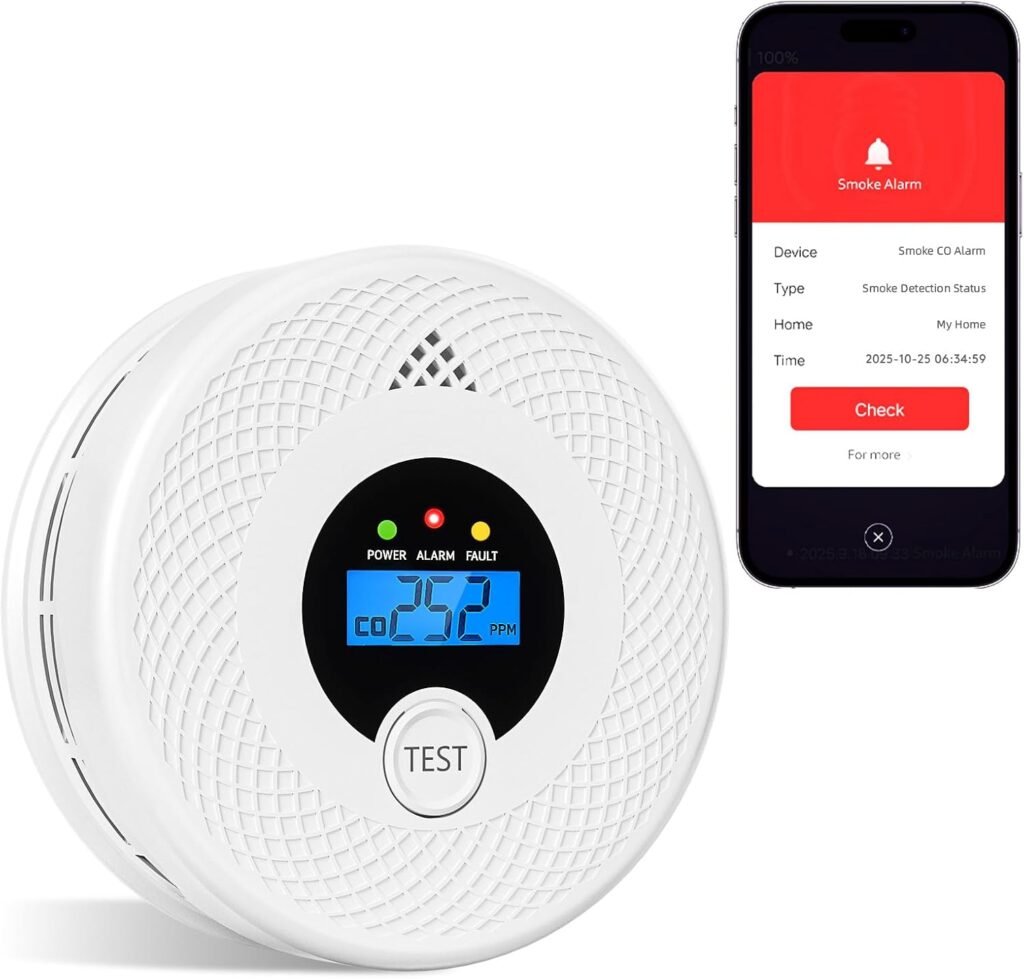
This is one of Amazon’s top-rated smart smoke detectors in the $35–$80 range — featuring Wi-Fi connectivity, smartphone app alerts, combination smoke and carbon monoxide detection, and voice alerts that announce which room triggered the alarm.
What separates a smart detector from a standard one:
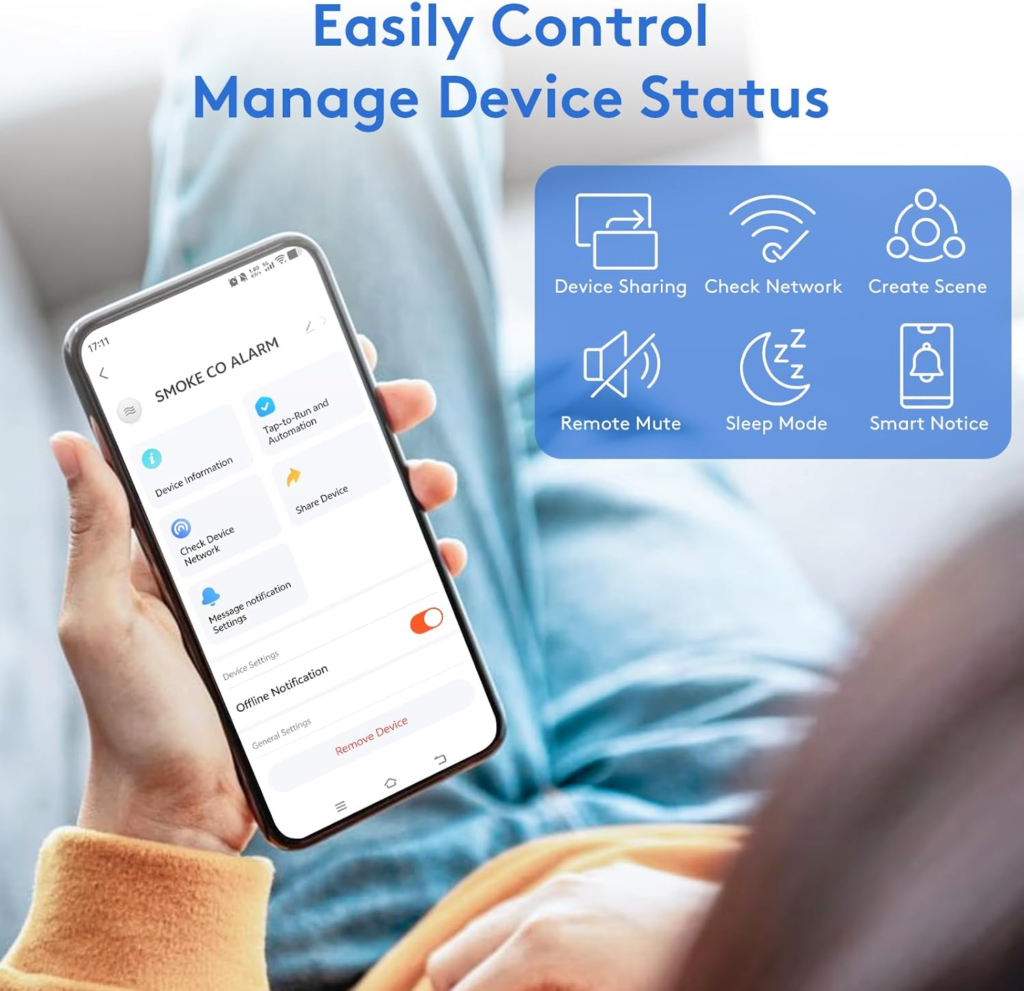
- Phone notifications: alerts you to smoke or CO anywhere in the world, not just in earshot
- Room-specific voice alerts: “Smoke in the Kitchen” tells you where to go or what to investigate remotely
- Interconnect capability: in multi-alarm homes, all smart detectors alert simultaneously and identify the source detector
- Self-testing: runs automatic diagnostics and alerts you to sensor issues before emergency, not during
- 10-year sensor life on many models — eliminates the battery alarm cycle of traditional detectors
Photoelectric vs. Ionization: The Technology Behind the Detection
Smoke detector technology affects what type of fires they detect fastest:
- Ionization detectors: respond faster to fast-flaming fires (paper, grease fires that burst into flame quickly) — most common type
- Photoelectric detectors: respond faster to slow, smoldering fires (upholstered furniture, electrical fires that smolder before flaming) — generally better for bedrooms
- Dual-sensor detectors: combine both technologies — the most comprehensive coverage for any room
- Most quality smart detectors are dual-sensor or photoelectric — check specifications before purchase
A smart smoke detector is one piece of a connected home safety setup. The guide to smart home devices that actually save you money covers how smart detectors, leak sensors, and smart thermostats work together to protect your home and reduce insurance and utility costs.

Before vs. After Installing a Smart Smoke Detector
Before:
- No way to know if an alarm triggered when away from home
- Standard beep with no information about which detector or what triggered it
- Annual battery replacement and the dreaded 3am low-battery chirp
- No carbon monoxide detection in the same unit
After:
- Instant phone notification for any smoke or CO event regardless of location
- Voice alert identifies the room: “Smoke detected in the bedroom” provides immediate context
- Remote alarm silence from app for false alarms without climbing on a chair
- All detectors interconnected — master alert when any unit triggers with source identification
5 Smart Smoke Detector Installation Tips
- Install within 10 feet of each bedroom door and on every level of the home — local fire codes typically specify minimum requirements; smart detectors meet all standard codes.
- Avoid placement directly above cooking appliances — heat and normal cooking steam causes nuisance alarms. A 10-foot clearance from the stove is standard guidance.
- Connect to 2.4 GHz Wi-Fi, not 5 GHz — most smart home devices operate on 2.4 GHz. If your router broadcasts both on the same SSID, the detector should still connect correctly.
- Test the app notification before you need it — trigger a test alarm and confirm the phone notification arrives. Know what the alert looks like before it’s 2am with real smoke.
- Set up family sharing in the app if other household members should receive alerts — everyone who might respond should get notifications, not just the account owner.
For renters and homeowners setting up a first smart home system, the beginner’s guide to smart home devices covers which devices provide the most safety and convenience value for minimal complexity and cost.
Q&A: Smart Smoke Detector Questions Homeowners Search
Q: Do smart smoke detectors work without Wi-Fi?
Yes — the local alarm function works regardless of internet connectivity. Smoke detection and the local siren operate independently of Wi-Fi. The only feature that requires connectivity is the smartphone app notification.
Q: Can I replace just one detector with a smart detector or do I need to replace all of them?
You can replace one at a time. Smart detectors interconnect with other smart detectors of the same ecosystem — but will also function as standalone detectors. Mixing brands in an interconnected system generally doesn’t work, so plan your upgrade path if interconnect functionality matters.
Q: What’s the difference between a $35 and a $80 smart detector?
Generally: dual-sensor vs. single-sensor detection, CO detection inclusion, battery life (10-year sealed vs. replaceable), build quality, and app ecosystem features. The $35–$50 range covers essential smart features well. Premium models add professional monitoring integration and more detailed diagnostics.
Q: How do I reduce false alarms from cooking?
Move the detector away from the kitchen (10+ feet), choose a photoelectric-only model for kitchen areas (less sensitive to cooking particles than ionization), and use the app’s temporary silence feature. Smart detectors often have a hush function that silences for 15 minutes without disabling the unit.
Final Take
A smart smoke detector is one of those upgrades that seems unnecessary until the one moment it isn’t — and that moment comes with no warning. Remote notification when you’re away is a feature that doesn’t cost much and could prevent an outcome you’d never recover from financially or emotionally.
Connected home. Protected home. Phone in your pocket.
Silent until it matters. Loud when it counts. Always watching.
Affiliate disclosure: This article may contain affiliate links. If you purchase through them, SimpleHomeGadgets.com may earn a small commission at no additional cost to you.